
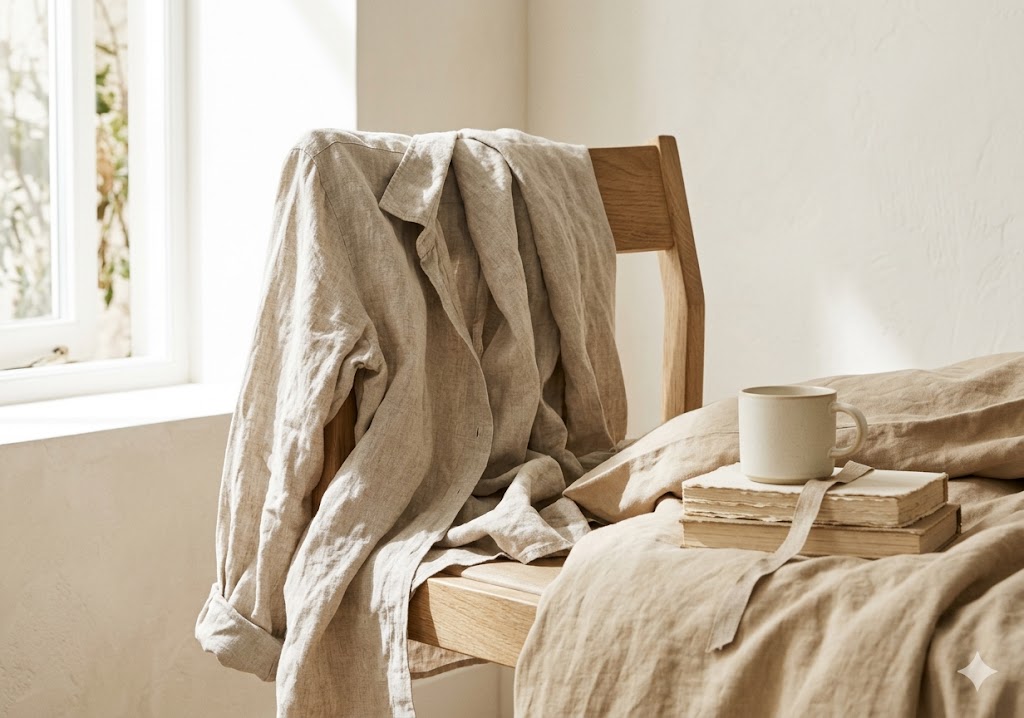
Linen wrinkles. This is not a flaw. It is the entire point. A linen shirt at eight in the morning looks pressed and proper, almost cautious. By six in the evening it has softened into something better — creased at the elbows, slightly rumpled at the collar, carrying the memory of the day in its folds. No other fabric does this. No other fabric improves with wear the way linen does, trading perfection for character with every hour.
There is a reason linen keeps surfacing in cultures that value craft over convenience. In Japan, where textile traditions run centuries deep, linen — or asa — has long been prized not for its smoothness but for its irregularity. The slight slub in the weave. The way it takes dye unevenly, producing color that looks lived-in from the start. Japanese artisans understood something the modern garment industry has mostly forgotten: a material should respond to the body wearing it, not resist it. Linen breathes when you breathe. It moves when you move. In summer heat, it wicks moisture and dries fast, creating a small envelope of coolness against the skin. Cotton clings. Synthetics trap. Linen lets go.
But linen is not only a wardrobe material. This is where it gets interesting. The same fabric that makes the best summer shirt also makes the best napkin, the best curtain, the best bedsheet. A linen napkin on a table set for dinner carries the same quiet authority as a linen blazer at that same dinner. The thread count changes, the weave weight shifts, but the fundamental quality remains: a surface that is soft without being slick, textured without being rough, and warm in tone even when it is white.
Think about the rooms that feel most right in summer. They are not the rooms with blackout curtains and sealed windows. They are the rooms where linen panels hang loose, filtering afternoon light into something golden and diffused. Where a linen throw is draped over the arm of a chair not for warmth but for texture. Where the tablecloth has been washed so many times it drapes like water. These rooms breathe the same way a linen shirt breathes — openly, without effort. The best-dressed rooms and the best-dressed people share this quality. They are not trying to look perfect. They are trying to look real.
Linen pants in a pale oat. A linen camp shirt in faded indigo. Linen placemats stacked on a shelf. Linen curtains pooling slightly on a hardwood floor. These are not separate categories — clothing here, home goods there. They are expressions of the same idea: that the materials closest to your skin and closest to your daily life should be the same materials. Natural. Breathable. Patient. The kind of fabric that does not perform but simply exists, getting softer and more honest with time.
Summer is linen season not because of marketing but because of physics. Heat asks something of the fabrics around us, and linen answers better than anything else. It answers in the shirt that dries in minutes after a walk through humid air. In the napkin that absorbs a glass of cold water’s condensation without going limp. In the curtain that catches a cross-breeze and holds it, just for a second, like a breath. Linen does not fight the season. It joins it. And by September, every piece — worn, washed, draped, folded — will be better than it was in June.
Shop the Story
European Linen Pants → The Must-Have Shirt in Linen → Browse Clothing